• Home

Diversity and Management Part IV

Published in October 21st, 2008
Posted by diversity in Diversity Management, Managing People, Organizational Culture
No Comments
For a lot of obvious reasons, innovation has become the new catchword in business. Recent research by McKinsey reveals that there is a wide gap between the aspirations of executives to innovate and their ability to execute. 70% of senior executives say that innovation will be among the top three drivers of growth in the next three to five years. In addition, 94% say that people and culture are the most important drivers of innovation.
 
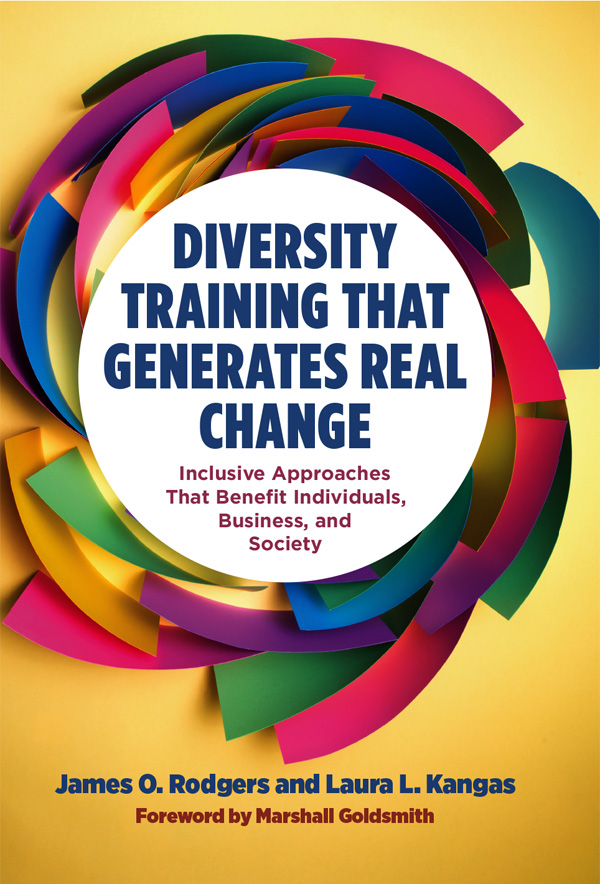
This poses a major challenge for organizations. My own experience indicates that culture is relatively intractable and people are unpredictable. So what can leaders do to overcome this obvious dilemma. There are no best practice solutions to cultivate innovation. My experience suggests that a focus on people management fundamentals may be the key. In Managing Differently, I try to make the argument that it is managers, more than leaders, that produce the winning outcomes for business. Here are three people management ideas that may be useful in the quest for innovation.
 
Number one.
Along with key strategies like diversity management, innovation should be added to the strategic management agenda. This means that innovation should not only be encouraged, but managed, tracked, and measured as a core component of the company’s growth aspirations.
 
Number two.
Managers must learn to make better use of the existing talent for innovation. The seven principles of Managing Differently can be a good start for helping managers get the best from all their employees all the time.
 
Number three.
Leaders must take steps to foster a culture of innovation based on trust among employees. For this to happen, employees must know that their ideas are valued, and that it is safe to express those ideas.
 
The best predictor of innovative performance is supportive leadership. The top motivators of innovation behavior is strong leaders who encourage and protect innovators along with great managers who actively manage it. Rewarding nothing but short-term performance and maintaining a fear of failure inhibits a culture of innovation.
 
Let’s not assume that we all understand what I mean by innovation. My definition of innovation is a creative idea for a new product or service,or process that has been converted into a revenue producing activity. It is not enough to have a creative idea. Innovation requires that the company get some significant benefit from that idea. That only happens when the idea is converted into a revenue stream.
 
Here are three ideas that can advance innovation.
 
1.      Make sure all senior leaders consider innovation a top priority. For this to happen, all members of the top team must agree that promoting innovation is critical to corporate success. They must then reflect on how their own behavior reinforces our inhibits innovation. This is the same principle that we espouse for installing diversity management as a strategy.
2.      Create innovation coaches. Identify those managers who are already acting as brokers to improve innovation Pull them aside and give them opportunities to develop their coaching and facilitation skills so that they can build the capabilities of other people who have a knack for innovation.
3.      Allow managed experimentation and quick success. This approach is typically the best way to start any change effort in large organizations. Quick success has been called “plucking the low hanging fruit”, and is a way to generate excitement about the possibility that innovation can actually work.
 
Innovation is a big idea with big potential. Like all big ideas. it takes work to make it happen. Having the aspiration means little until the decision is made that execution is critical. Remember, innovation lies at the intersection of creativity and deliberate diversity. Are you ready to take that step?

Diversity and Management Part II

Published in October 14th, 2008
Posted by diversity in Diversity Management, Managing People, Organizational Culture
No Comments
I have long contended that innovation lies at the intersection of creativity and diversity. My argument is that to get real innovation in an organization requires a well managed, diverse team of people, with the freedom to try new ideas and develop new ways of doing things. The problem as I see it is that most organizations are not organized or equipped to allow that level of innovation.
 
Gary Hamel, the author of the new book The Future Of Management, makes a similar argument. He suggests that the 20th century model of managing, undercuts the 21st century need for collaboration wealth creation and innovation. n fact, the 20th century model generates unnecessary complexity within an organization that virtually disrupts innovation. He goes on to say that most organizations today do not have innovation or adaptability DNA.
 
My favorite example of this point is a company that I have come to admire greatly. Johnson & Johnson Consumer Companies is an example of a well run organization with a strong inclusive culture. J&J is an example of a company not only espouses their values, but actually lives their values. The well-documented, J. and J. Credo is a living document that guides the decisions that J&J leaders make every day. Most of you are aware of the famous Tylenol scare in which Johnson & Johnson set a high bar for responding to a corporate crisis by recalling all Tylenol product when there was just a moderate to slight possibility that some of them may have been tampered with. It was a costly decision, but totally consistent with the Credo. Many of you may not be aware that that was not an uncommon occurrence. I can personally cite at least five other occasions, which did not get headlines like Tylenol, but which illustrate J&J’s adherence to its values. The most recent was their decision to withdraw their plans to purchase a company called Guidant. That decision was due largely to the fact that Guidant was found guilty of hiding the fact that their personal defibrilators were potentially dangerous to consumers. Upon review of that behavior (hiding the truth), it became clear that Guidant would not be a good match for the J&J culture, despite the potential financial benefits.
 
While I admire J&J’s culture and adherence to ethics, I also observe that J&J, like GE, Cisco, and other companies, is not designed for innovation. J&J’s business model relies heavily on its marketing and sales prowess. Recognizing the businesses that they are in, they pay special attention to entrepreneurial ventures that are generating new ideas that could be useful in serving medical providers and consumers of health and personal care products. Once J&J Thinks that the products are viable and a moderate market has been established, they buy the company. The obvious benefit to the acquired company is while they could produce sales of a hundred million for their product, J. and J. could produce sales of one billion. It is a model that works and takes full advantages of J&J’s strengths. It also illustrates why J&J is not likely to be a paragon of innovation anytime soon. Instead of growing through innovation, J&J just buys innovation.
 
I’m also a major proponent of using management as a catalyst for producing organizational success. When the remaining questions, as we move deeper into the 21st-century is, what problem was management. as we know it, designed to solve? Gary Hamel suggests that old-style management was designed to get people to serve the organization goals. That old model has to be replaced with one that asks the question. “How do we build organizations that merit the gifts of creativity, passion, and initiative, which are things that people can choose to bring or not bring to their work.
 
This dilemma is further complicated by the fast-growing new wave of employees called the Millenials. These younger people have been raised to believe that their contribution inside the organization should be judged simply on the merits of what you do not on your title, credentials, or providence. What’s an organization to do?
 
In a very selfish way, organizations need to begin with hiring talent and using that talent to make profits. That brings into question the old 20th century model of managing organizations. Talented people in the 21st-century are not likely to need, nor will they stand for traditional hierarchy. One thing that I have discovered is that most organizations pretend that they want to hire the best and brightest. In fact, all the evidence suggests that they don’t. The reason, of course, is that really bright, talented people are a pain in the behind. They don’t follow rules; they don’t want to honor the hierarchy; they question everything; they take action without permission; and, they take what they believe are reasonable risks. Let’s be honest, most organizations and most organizational cultures were not designed to accommodate these rebels. So, while organizations say that they want the best and brightest, in fact, they are looking for people who are good enough, and most likely to fit into the organizational culture. Before you jump to conclusions and think that this is a putdown, let me assure you I believe that it represents smart management. Having a bright person on your team who is not able to work with others is a disruptive factor. So, you have to do an analysis to determine if you want diversity and innovation, and if so, what adjustments are you willing to make so they can thrive in your organization.
 
Going forward, not many companies will be able to waste any of the human imagination and intellectual capital that they have. CEOs will need to abandon thinking that some few of their employees are clever and imaginative, but most are not. They will have to learn, like Toyota and others, that you can get the best ideas from ordinary people. Getting the best from all of your people, all the time is the result of the process we call Managing Differently.
 
The thing that really stops innovation in most organizations is risk.  Many talented people don’t see risk the way others do. CEOs are terrified of any disruption that can put their quarterly earnings at risk. So, there is a gap between the radical rhetoric of innovation and reality. Diversity Management strategies, properly executed can be the catalyst that makes innovation possible. Even in those organizations which are risk-averse.

Diversity and Management Part II

Published in October 7th, 2008
Posted by diversity in Diversity Management, Managing People
No Comments
The McKinsey Quarterly reported in its 2008 edition that nearly half of the executives that they surveyed identified increased competition for talent as the trend that will have the greatest effect on their companies over the next five years. They further report that a majority of the respondents say that their companies don’t have a clear view of how to meet this challenge. In fact, most companies are not organized to manage global trends such as the war for talent.
 
There is a new cottage industry, focusing on how to deal with the latest generation of workers to enter the workforce, the so-called Millenials. The practitioners of this industry play on the fear, anxiety, frustration, and anger that many managers and leaders are experiencing as they confront this new mysterious group of workers who won’t play by the old rules. It is true that an organization’s ability to attract, develop, retain and utilize this generation of workers will be key to their ability to win in the competition for talent and global success. After all, in a few short years (by 2015), Millenials will represent the largest generational cohort in the workforce.
 
While a lot is being made about this new generation, I have concluded that Millenials are not much different than any other generation. Towers Perrin conducted a global workforce study in 2007 through 2008. It is the largest polling study on the views of the global workforce done during this time. The firm collected 88,600 responses from employees in 18 countries. The study focused on attraction, retention and engagement through the eyes of workers at midsize to large corporations in a broad range of industries. 
 
In my work as a diversity management expert, I have long concluded that any cohort group (generations being the latest example) can be easily stereotyped, which will lead to massive mistakes in the competition for talent. Rather than managing a cohort group, I recommend that organizations learn to manage to the individual.
 
The Towers Perrin study suggested that the overall value system of Millenials is not as different from that of Gen Xers or Baby Boomers as anecdotes might suggest. There are dozens of articles that emphasize the younger generation’s push for work life balance. But there is a caution. That caution is: beware of assigning generational labels to individuals. It is true that Generation Y considers work life balance paramount. But the study indicates that work life balance is a significant retention driver for every age group. In summary, the study found that:
 
·         The number one driver of job attraction is competitive base pay. That is true for all generations,
 
·         The top driver for retention in every age group was excellent, career advancement opportunities. 
 
·         The number one driver for engagement was feeling good about the company.
 
·         The number one reason for career mobility (that is, willingness to leave one employer for another) has more to do with age or stage of life, not generation, and opportunity. Young Millenials are seeing that they have more job opportunities, and they tell themselves, if there are opportunities knocking out there and the company that I work for doesn’t do things to engage me then I’m going to leave.
 
In one of my speeches I present the audience with an example of a career experience and ask them to guess which generation it represents. The characteristics of this career experience match closely the stereotypes of Millenials. Most of the audience, in fact, guesses that the careerist is a millennial. After some prodding, I reveal to them that the career experience described was my very own, (I am a front end baby boomer). I use this exercise to illustrate the importance of managing to the individual and not allowing cohort labels to influence the way that we manage people.
 
So, to win the competition for talent, organizations need to pay attention to those things that are true across all generational groups. That includes better training, good relationships with supervisors, and development programs. All these things help to raise engagement scores. Organizations will need to learn that if they do the right things, they are not going to have to be concerned with generational differences. People want to be engaged by what they do every day. Provide that engagement and you can attract members of any generational group. The Towers Perrin study indicated that those companies with high employee engagement averaged about 19.2% increase in operating income while those companies with low employee engagement experienced an actual decline of 32% in operating income. Those companies that are winning tend to bring on better candidates, have better training, implement more diverse programs that make new hires more efficient at work, and are more willing to tailor the programs to make them more effective.
 
Diversity management is the strategy, procedures, tools, and principles that ensure your organization will win the competition for talent globally, and that will insure you will have the capacity to get the best from all your employees all the time.
 
Don’t get distracted.  Human nature is consistent. Gen Y (Millenials) may look different and have a different set of toys and tools, but they want and need the same things that all of the people in the in the workplace want and need. Be smart. Give the people what they want.

Diversity and Management Part I

Published in September 30th, 2008
Posted by diversity in Diversity Management, Managing People
No Comments
Many of you have heard me make a clear distinction between leadership and management. I believe that leadership is an impersonal activity. Management is a much more intimate activity. Leaders stand before the group and paint a compelling picture of the direction the group is going. They seldom if ever go door-to-door to make sure every person in the group understands their role in the process. They don’t have to get to know each person intimately to be effective. The power of their words and their personable demeanor is enough to mobilize, energize and clarify. Managers, on the other hand are more involved. They have the job of encouraging, supporting, and developing each person and making sure each one has what is needed to do the job they have been assigned to do. It is a day-to-day, face-to-face, one-on-one kind of deal. Management makes the difference. Of course both functions can be embodied in the same person, but they are two distinct roles.
 
One of the things that distinguishes a person in a leadership role is their ability to sell a compelling future to themselves, to other individuals, or to a group of individuals. As I’ve said before, leadership is a simple activity, but as I have also said, simple does not mean easy.
 
Chip Heath is a professor of organizational behavior at Stanford University’s Graduate School Of Business. He said recently in the McKinsey Quarterly, “Effective leaders are masters of simplicity." He further suggests that leaders are good at identifying the most central core elements of strategies and highlighting them consistently. (Much like standing on a hill with a banner raised screaming, this way!)
 
Examples of this abound. One of my favorites of course is David Ratcliffe when he was CEO of Georgia Power.  In the midst of a high profile lawsuit, David decided that the most important, most central, core element of their strategy for overcoming the pain of the employee lawsuit was to focus on the organization’s values. For two years straight, he worked relentlessly to elevate the importance of a set of values, called Southern Style. He never made a speech without mentioning them. He tied them to the diversity initiative and to a Leadership Challenge to become the most trusted leaders in the industry. He made his expectations concrete by telling simple stories. Most of the stories had to do with his upbringing in a South Georgia farming community. One of those stories is highlighted in the Introduction of my book, Managing Differently. But, he also told personal stories about his own journey to understanding the value of each individual employee and customer.
 
It was virtually impossible for anyone at Georgia Power at that time to misunderstand or mistake the expectations for them as leaders, managers, or individual contributors. David used a combination of simplicity, concreteness, and stories to make clear the direction that Georgia Power was going in, and that each employee would be held accountable for living out those expectations.
 
Leaders tell stories. That is a fundamental characteristic of effective leaders. The impact of storytelling is to clarify, simplify and illuminate the principles, processes and practices that the leader expects of himself, others, and the corporation.
 
What’s your story?

Summarize and Simplify

Published in September 30th, 2008
Posted by diversity in Diversity Management, Managing People, Spirit and Wisdom
No Comments
 
I spoke recently to the incoming MBA class at The Goizueta School Of Business at Emory University. The panel included several senior executives from large corporations. I was the only consultant or external practitioner on the panel. After the session, one of the visiting participants came up to me and made the following comment. She said, "you have a remarkable ability to summarize and simplify the complex issues being discussed. You make it so plain."
 
I received the comment with a thank you. The fact is that I get that comment from people quite often. So I have come to accept that as one of my gifts. In fact, I find myself often, reviewing voluminous text and summarizing it in my head or in my journal as a short pithy summary phrase or sentence.
 
Just recently I’ve been studying spirituals living, leadership, and diversity. Here’s what I have concluded. Each of these concepts has a simple message that has been convoluted and co-opted such that the core message has been obscured.  Here’s my reading.
 
The message of the Bible (on the spiritual living).
The core message of the Bible is this: love (love God, love others, love yourself). Everything else in the Bible is intended to illustrate how you do that.
 
The essence of leadership.
Leadership is the act of effectively selling a vision or a compelling future to yourself, to other individuals, or to groups. Everything else that is written about leadership (over 16,000 books and counting) are merely attempts to describe how you do that.
 
Diversity.
The core message of the diversity movement is a call to recognize and acknowledge the differences and similarities that are a fact of life in any group of humans. Everything else (diversity management, inclusion, multiculturalism, pluralism, talent management, human capital management, etc.) are attempts to describe how to do that.
 
I recognize that these definitions may be too simplistic for some and may not resonate with others. In later posts, I plan to expand on these simple truths and invite your comments, with this proviso. Only if you disagree profoundly and conceptually, should you offer alternative language (too often we play wordsmith games that distract us from core meaning).
 
The more I read of the commentary and anecdotes of thought leaders in these three areas, I am struck that each one senses that the core message has been diluted and lost. While I am certainly in favor of a variety of voices expressing their points of view on these and any other topics, we must recognize that the more that is said about any topic, the higher the likelihood that there will be misunderstanding, miscommunication, disagreement, and controversy. Unfortunately, the net result is that most people are confused about the essential, life-changing, performance-enhancing value of these concepts. My hope is to reintroduce the simplicity of these basic truths, even at the risk of adding to the confusion.
 
Your thoughts, advice, praise, reprimands, and confirmations are welcome.

Diversity and Politics Part III

Published in September 23rd, 2008
Posted by diversity in Organizational Culture
No Comments
Now this is the way for a non-delegate to attend a political convention!
 
First, let me confess that I am not a registered Democrat (or Republican). I identify as a (conservative leaning) Independent. But as a former Democrat, I could not pass up an invitation to attend the convention as a VIP Guest. Besides, it was being held in Denver, one of my favorite cities.
 
We arrived on Tuesday at noon. The first session we were to attend was that very evening. At the appointed time, we walked to the hotel of our hosts and friends, C.D. and Karla Moody. We gathered with other guests for a few minutes. Then, we were advised that the car had arrived.
 
We were then loaded into a new Black Cadillac Escalade with a female driver (Deborah). Deborah is a native of Denver and knows a lot about local culture and geography. For instance, on our way back from the convention, she drove us pass the city park and the Denver Art Museum (at my request).
 
While others had to walk ten blocks or more to approach the Pepsi Center, for security reasons, we were transported through security in the car and after customary screening, were driven to the front door of the center.
 
I saw lots of celebrities going in and coming out. They included all the major news personalities (Tom Brokaw, Wolf Blitzer, Donna Brazile), politicians (Charlie Rangel, Michael Dukakis), and performers (Lynn Whitfield, Dorian Harewood, et al).
 
I also noted that the convention was a convenient occasion for some massive partying both during session and late into the night. Every hotel that we stayed in was home to several state caucuses and corporate sponsors who made sure they were comfortable.
 
By the way, the convention lasted four days. The actual official business of the convention took about ten minutes (with the exception of the perfunctory roll call to honor Hillary’s historic candidacy). If both Presidential candidates want to change something about our political process, they might start by eliminating these hundred million dollar family reunions.

Diversity and Politics Part II

Published in September 16th, 2008
Posted by diversity in Diversity Management, Organizational Culture
No Comments
 
The lineup of speakers at a political convention is interesting. It’s almost like a court proceeding. is a cast of witnesses, some expert, most not. Some resonate with the jury. Others fall flat. The idea, of course, is not necessarily wow the jury, but to get the ideas on the record.
 
As I sat in the convention hall, I noticed that there was always a scurry of activity everywhere and a low cacophony pervading the room. Whenever a speaker took his/her place at the podium, it took only a few seconds before you could determine if s/he resonated with the audience. If not, the noise level went up and the poor speaker would lumber through their remaining comments and leave the stage. There was always polite applause. By the way, it didn’t matter if the speaker was a prominent party leader or an everyday citizen espousing the virtues of the party position, they either were a hit or not.
 
The speakers who got the audience’s attention, were more expert at getting them engaged. If they were able to do so, the din of conversation went down precipitously. The audience leaned on the speaker’s every word and responded with a call and response or cheers and applause at the right time.
 
Here’s the point, though. Whether a hit or not in the hall, every speaker had some key point that the party leaders wanted to get on the record. And, while I could barely hear some of them while sitting in the hall, the television version was clear, crisp, and easily understood. The record was made.
 
A few examples from this convention bear exposure here.
 
Javier Becerr, a House member from California, captured the crowd and made his point with an old family proverb. He said, “tell me with whom you walk, and I’ll tell you who you are.”
 
John Sweeney, President of AFL-CIO, did not play well in the hall, but got the following point on the record. “There are 28 million union households in America who count.”
 
Jim Whitaker, a Republican from Alaska, was effective in the hall and got great response by asserting that we are all “Americans first”.
 
Steny Hoyer, House Majority Leader, did not completely enrapture the crowd, but was able to get on the record the fact that the Republican ultra conservatives engage in “country club economics”.
 
One of the best zingers I heard on the second day was by Ted Strickland. He gave the baseball analogy of how the Bushes have handled the Presidency. George Bush I came into office on third base (after Reagan) and arrived at home believing that he had hit a homer. “W” (Bush II) also came into office on third base (after Clinton) and proceeded to steal second (with John McCain cheering him on every step of the way.
 
Then there were the obligatory speakers who were given the platform as a courtesy. Most notable among them was Governor Sebelius from xxxxxx, who was rumored to be a VP finalist but was surprisingly ineffective with the crowd.
 
By the way, a panel of corporate luminaries, including Jim Rodgers (not me), CEO of Duke Energy, talked about the energy plan. It was the first time I understood clearly how elegant the Obama plan for energy independence is and how achievable it is. The principles of the plan include renewable sources, new jobs, conservation, and world leadership. Most corporate leaders know from experience that clear principles serve as a guide to effective execution. I got it.

Politics and Diversity Part 1

Published in September 9th, 2008
Posted by diversity in Diversity Management, Organizational Culture
1 Comment

DNC Day 1

The first thing that struck me about the convention was the DNC’s summary of the diversity of the delegates. On every newscast covering the convention, it was noted that:

 
24% of delegates are African American.
12% of delegates are Latino/Hispanic
6% of delegates are gay/lesbian
4% of delegates have physical disabilities.
17% of delegates are 36 or younger
12% of delegates are 65 or older
49% of delegates are men
etc.
 
The report is one thing. Reality is another. So, I was careful to “observe” that the optics of the convention actually matched the statistics that were being proffered. There is a message here. And, it is not that the Democrats are unusually progressive. It is that diversity is, as I have predicted for twenty years, becoming an ever-increasing fact of national life. And the trend is not about to reverse itself.
 
We have lamented over and again that the face of leadership, politics, business, and other institutions does not reflect the actual makeup of our population. Even at the convention, the majority of the key speakers in prime time were still White men, (Clinton and Obama being the notable exceptions). But, if leadership evolves from the ranks of the institution, the above statistics clearly indicates that the old order cannot long endure. This is a microcosm of our society. What caused the diversity mix to be so broad at the DNC? Was there a deliberate effort on their part to recruit a more diverse mix? Or, is it that the natural order of things produced this mix of elected delegates and the DNC simply had to say, “sure, come on in. You can play”.
 
I continue to advise my clients that traditional diversity (minority recruitment, image, workforce profile, etc.) is not worthy of their time, attention, and investment. In fact, I said to some of my consulting colleagues recently, any organization would have to work extra hard to keep increasing diversity from sprouting up. (of course, there are some who have chosen to do that hard work, but their days are numbered if they keep it up). The bigger challenge is what I call diversity management. When talent shows up in different packaging, will organizations be willing to say, like the DNC, “sure, you can play. Come on in”
 
Again, we will see that necessity and evolution will produce change that never yielded to entreaty (translation, don’t force the mix, let it evolve naturally. But be prepared to welcome it when it comes).
 
America will never return to the days when white, non-Hispanic, heterosexual, able-bodied men will dominate the numbers or the agenda. Some may lament that fact and try to resist the inevitable. Of course, the healthier response would be to “get use to it”.

Diversity Management in Energy Industry

Published in July 15th, 2008
Posted by in Diversity Management
No Comments

Recent studies show a significant correlation between a culture of inclusion (which can be created with an effective diversity management strategy) and long-term business success. For example, in their book “The New Corporate Cultures: Revitalizing the Workplace after Downsizing,” Deal & Kennedy reported that strong inclusive cultures averaged 571 percent higher gains in operating earnings and 417 percent higher return on investment (ROI) than companies with weaker cultures over an 11-year period. What did these successful companies do to produce such astounding results, and can power companies, which represent a traditionally stable industry, implement the same model to impact their bottom lines? 

Continue reading this post…

Diversity, Dignity, Culture, and Spirit

Published in July 1st, 2008
Posted by in Diversity Management
No Comments

Welcome to my site. I want to start a dialogue about seemingly unrelated matter that I find is at the core of every human interaction. Whether it’s business relations, family relations, social relations, community, faith community, associations, politics, romance, or the arts; the world runs on relationships. So I want to separate the components and comment on what we see and what we miss in each of the areas that affect relationships that work. For instance

Continue reading this post…

Social Network

  • Subscribes to feed
  • Stumble this site main post
  • Add to my Technorati favourite
July 2009
M T W T F S S
« Oct    
 12345
6789101112
13141516171819
20212223242526
2728293031  

Recent Entries

  • Diversity and Management Part IV
  • Diversity and Management Part II
  • Diversity and Management Part II
  • Diversity and Management Part I
  • Summarize and Simplify
  • Diversity and Politics Part III
  • Diversity and Politics Part II
  • Politics and Diversity Part 1
  • Diversity Management in Energy Industry
  • Diversity, Dignity, Culture, and Spirit

Recent Comments

  • Terri in Politics and Diversity Part 1

Translators

French German version Spanish version Italian version

Categories

  • Diversity Management
  • Managing People
  • Organizational Culture
  • Spirit and Wisdom

Archives

  • October 2008
  • September 2008
  • July 2008

Pages

  • Home

Blogroll

  • Coaching Beyond Belief - Jim Rodgers is a natural coach
  • Development Blog
  • Documentation
  • Plugins
  • Suggest Ideas
  • Support Forum
  • The Diversity Coach - Diversity and Management Thought Leadership
  • Themes
  • WordPress Planet

Meta

  • Log in
  • Valid XHTML
  • Valid CSS
  • WordPress
  • Virtual Business Assistant
©2008 James O. Rodgers
Powered by WordPress | Blog design by Web ID